

Reclaim your voice and speak up in the room
- Phaedria St.Hilaire

- Feb 1
- 2 min read
Updated: Apr 26
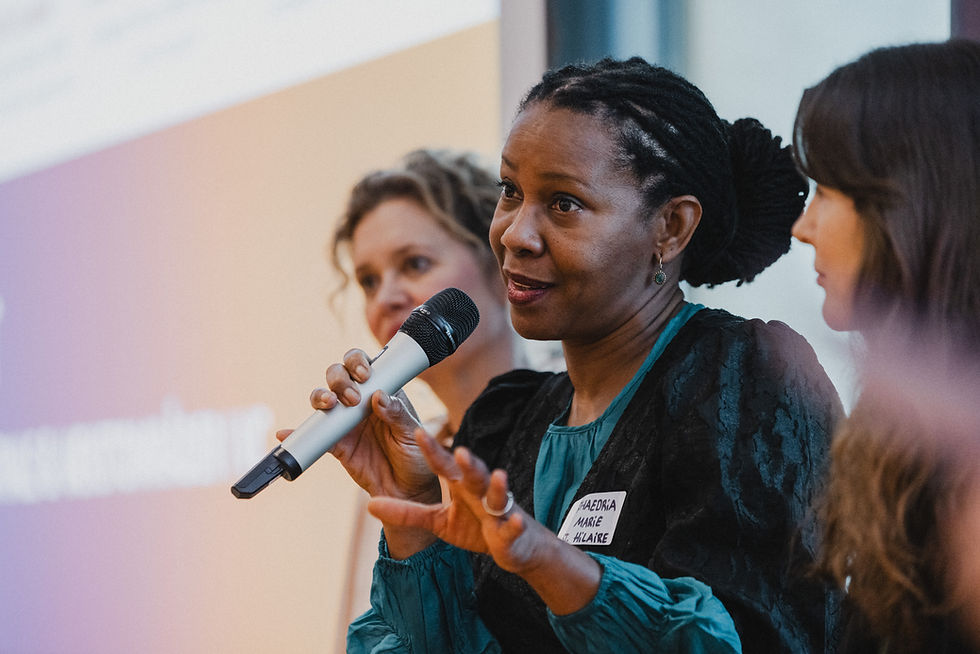
Being The First, The Only or The few sometimes makes it harder to fully step into our power.
There is so much riding on our presence in such spaces where we stand out but may not feel comfortable being the only.
We earned it. We worked hard for it. The seat at the table is rightfully ours. We represent. Yet, the room does not feel like ours. We do not feel like we belong and speaking up can be difficult.
How do we speak up authentically?As one manager I coached articulated it
“If you’re too strong, you’re an angry Black woman. If you’re too soft, you can’t handle the role, or you’re unqualified.”
For women, speaking up can feel like swimming upstream. In a 2024 McKinsey report, 40% of women report being interrupted or spoken over more than others in meetings (compared to 20% of men).
Frequent interruptions can erode the confidence of women making us more reluctant to speak up in the future, which in turn reduces our visibility and can negatively impact our career advancement. When women reduce their participation in meetings, there is a loss of valuable contributions for organisations. More importantly, unchallenged interruptions can reinforce the unconscious bias that men’s contributions are more important.
Cultures with flat hierarchies expect everyone’s input, but cultural norms and a reduced sense of belonging can make it difficult to fully participate.
How can we reclaim our voice and speak up in rooms where we may not feel 100% comfortable and where we most likely will be interrupted?
Here are three thing you can do to reclaim your voice:
Build your confidence for speaking up by cognitive reframing: What is the reason for not speaking up? If it is fear, remember that fear is rooted in unhelpful beliefs (“My idea may be stupid”). Identify those thoughts and replace them with realistic, empowering alternatives (“My idea could spark better decisions”).
Prepare one clear point before each meeting and deliver that point early in the meeting. Reiterate your contribution if it was ignored or if you were interrupted, e.g. “I would like to revert to xxxx I raised earlier ...” Show how your point is relevant to the overall purpose and outcome of the meeting.
Share your goal (“I’m going to speak up more”) with a mentor, sponsor, or ally in your network. Ask them to hold you accountable and/or to intervene (“I would like us to listen to xxxx’s contribution. Let her finish her point”) if you are interrupted.
Over time and with practice, you will be comfortable speaking up, your deliberate contributions will become unmistakable and your voice, indispensable.


Comments